SREday

Site Reliability, DevOps and Cloud

May 8, 2026 Dynatrace, Barcelona, Spain

1
Day
20+
Speakers
1
Track
90+
Attendees

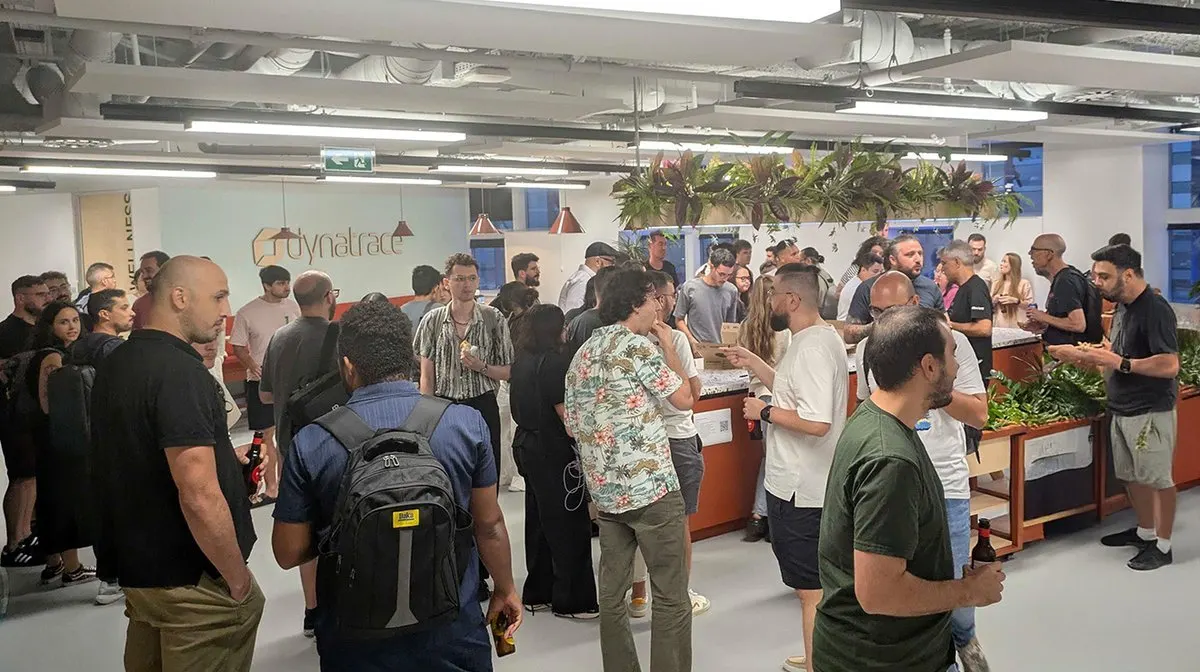
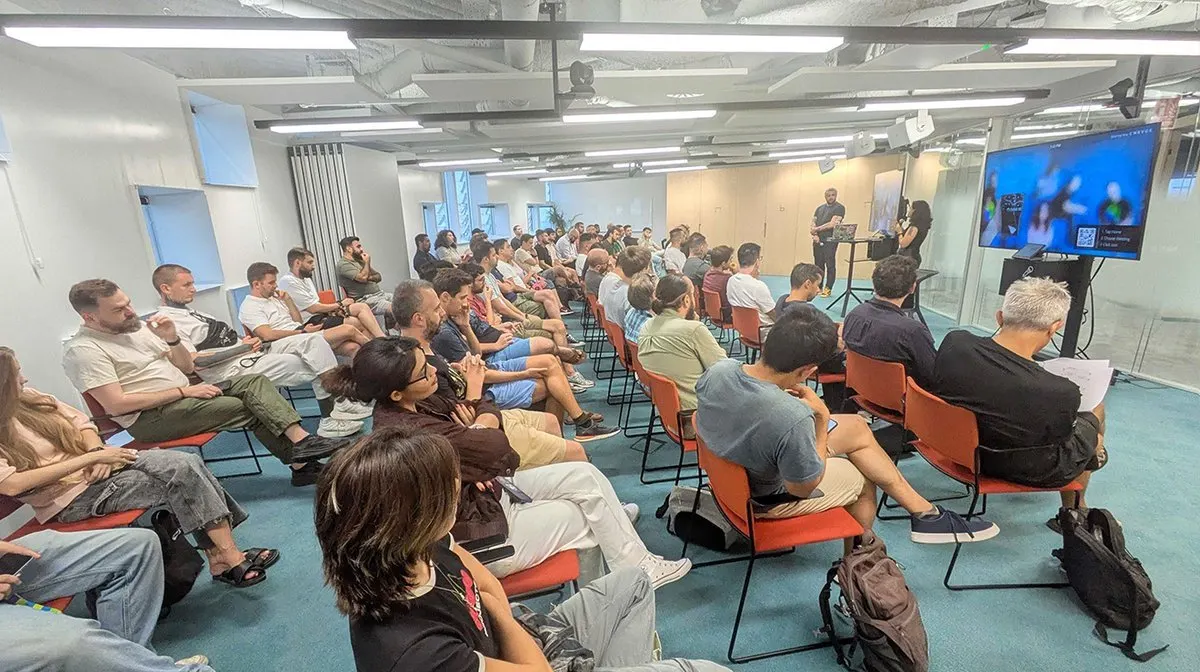
SREday is a worldwide series of community events for engineers who build, ship and run modern software systems. Across cities around the world, we bring together people working in reliability, cloud, DevOps, observability and production engineering to share real-world experience, connect with their local community and explore how these disciplines are evolving in the age of AI.

Companies presenting:

AWS, Cisco, Dynatrace, Gatling, ilert, PagerDuty, Sateliot, SCRM Lidl International Hub, STACKIT Cloud

Topics so far:

We'll announce more talks soon, stay tuned!

This is a past event, what's next?

Schedule

May 8, 2026 single track 10AM - 5:30PM Barcelona, in-person
view as table
main room • Track 1

10:00

Andreas Grabner

KeynoteStranger Platforms: The Two Sides of Observability and Resiliency in Your IDP

Dynatrace
Your Internal Developer Platform lives in two worlds. In the Right Side Up, developers rely on self‑service observability and resiliency to build, deploy, operate and debug their apps. In the Upside Down, the platform itself must be observable to ensure its reliability, performance, resiliency and to understand usage patterns and adoption. The twist? these two worlds are not separate. Improving observability and resiliency of the platform directly improves the observability and resiliency for the applications built on top of it. Just like in Stranger Things, observability and resiliency becomes the bridge that connects both realities In this talk you learn real-world OpenTelemetry-based best practices to observe the core layers of your platform such as your Git, Argo, Backstage and k8s! You learn how to derive SLOs from that data to increase resiliency for your platform and the apps and services deployed through your platform!... Read more

10:30

Birol Yildiz

KeynoteWhen Incidents Fix Themselves: AI SRE in action

ilert
The next evolution of incident response isn’t faster alerts, it’s autonomous resolution. Join ilert CEO Birol Yildiz as he shows how AI SRE agents now diagnose and remediate outages without waking anyone up. Learn how these systems combine observability data, deployment context, and code intelligence to restore services in minutes and hand over clean incident reports instead of 3 a.m. pages.... Read more

11:00

Coffee break

Main lobby

11:30

Heather Thacker & Daniel Coll Leal

What Happened and Why: Correlating Load Testing with Observability

Gatling & Dynatrace
Load testing tells you what happened. Observability tells you why. But too often these disciplines operate independently, leaving teams manually piecing together performance regressions with server-side telemetry after the fact. This talk introduces the key concepts behind correlating load testing metrics with infrastructure and application observability data, and why automating that correlation is a force multiplier for reliability and informed decision-making.... Read more

12:00

Almudena Vivanco

Don't thank the AI

SCRM Lidl International Hub
The exponential growth of Generative AI (GenAI) is simultaneously revolutionizing business and creating an unsustainable demand on global energy infrastructure. Are you ready to scale your Cloud capabilities without compromising your corporate sustainability goals? Our presentation introduces a strategic framework for Sustainable Cloud Solutions that turns resource intensity into an opportunity for operational efficiency and environmental stewardship. Stop settling for legacy infrastructure that strains the grid and join the movement toward performant systems engineered for a zero-carbon future. This presentation tackles the urgent and growing environmental footprint of GenAI, driven by its high-resource training and deployment. We will detail the alarming reality of GenAI training clusters, which exhibit an intense power density consuming 7-8 times the energy of typical workloads, rapidly necessitating reliance on fossil fuel-based data centers. Using concrete examples, such as the estimated 1,287 MWh and 552 tons of CO2 generated by the training of a major model like GPT-3, we establish the critical need for change. We then pivot to the practical application of Performance Engineering and Sustainable Software Development—the only viable solution to manage these demands. The session will cover key mitigation strategies ranging from architectural redesigns to code-level optimizations. Attendees will leave this session equipped with actionable knowledge and a strategic roadmap to immediately reduce the environmental and operational cost of their Cloud Solutions. You will learn how to: Implement Green Coding Practices: Discover specific techniques to optimize code for maximum computational efficiency and minimum energy consumption. Architect for Sustainability: Master the adoption of Sustainable Software Architectures, including the strategic deployment of serverless computing and microservices to ensure resources are consumed only during active execution, eliminating wasteful energy use from idle servers. Apply Energy-Efficient Algorithms: Identify and deploy algorithms and data structures that offer equivalent performance with a significantly smaller energy and carbon footprint, future-proofing your GenAI projects.... Read more

12:30

Julia Lamenza

The Most Expensive Mistakes in Cloud Infrastructure

Consultant
Cloud platforms make it incredibly easy to deploy infrastructure in minutes, but they also make it surprisingly easy to create costly mistakes that quietly inflate cloud bills and reduce system reliability. In this talk, I will explore some of the most common and expensive mistakes teams make when running cloud infrastructure at scale. Drawing from real-world SRE experience operating cloud-native systems, this session highlights practical examples of how these issues appear in production environments and how teams can identify and avoid them. Attendees will leave with a better understanding of the hidden pitfalls in cloud infrastructure and practical strategies to build systems that are not only reliable, but also cost-efficient.... Read more

13:00

Lunch & networking

Main lobby

14:00

Oriol Matavacas Rodriguez

Disaster Recovery of Workloads on AWS

AWS
In this session, we'll explore the architecture best practices and AWS tooling that enable organizations to design highly available and disaster-resilient workloads in the cloud. We'll start by laying the foundation with High Availability patterns, and then we will talk about AWS Toling like Well Architected Framework, Route 53 Application Recovery Controller, AWS Elastic Disaster Recovery and Fault Injection Service (FIS)... Read more

14:30

Diego Delgado

Canary tenants: how we measure customer experience without touching customer data

STACKIT Cloud
At STACKIT we run a multi-tenant Git platform with hundreds of tenants. Customer data is off-limits. By design, not by accident. We have no access to their repositories, no way to inspect their traffic, no debugging backdoor. So how do you know customers are having a good experience when you can’t look at what they’re doing? Our answer is canary tenants. A synthetic tenant that we provision in production alongside the real ones, running end-to-end checks every minute. Control plane journeys, data plane journeys, all on infrastructure we own. Zero risk to customer data. In this talk I’ll walk through the architecture with CanaryChecker, how we keep synthetic traffic out of our real-user SLIs, and why running canaries in production gives better signal than an isolated staging environment. I’ll also cover what canary tenants can’t tell you. Tenant-specific config drift. Data-at-scale issues. Every feature outside the happy path. These are blind spots we’ve chosen to accept rather than close, and I’ll explain why.... Read more

15:00

Ricard Bejarano

The inconspicuous role of conntrack in Kubernetes networking

Cisco
One very common assumption of Kubernetes practicioners, even those in the network side of things, is that Kubernetes Services behave like good old load balancers. And to a certain extent, Services do behave in a similar fashion to what one would typically classify as a round-robin load balancer. However, the reality of it is much deeper than that. Both simpler and more complex at the same time. In this talk we'll go over an incident we had on September 2025, where a mix of this misconception, Istio's behavior, CoreDNS' failure, kube-proxy's silence, and iptables and conntrack interoperability made it look like everything was OK, yet DNS—it's always DNS—was failing. We will go deep into how brilliantly simple Kubernetes' networking is, how Istio's DNS works on top of Kubernetes' DNS, and how both broke each other.... Read more

15:30

Networking & sponsor crawl

Main lobby

16:30

Daniel Afonso

Plan for Unplanned Work: Game Days with Chaos Engineering

PagerDuty
How do you plan for unplanned incidents? You practice with Chaos Engineering. Strong incident response doesn’t just happen, you have to build the skills and train your team. Practicing for major incidents gives your team insight into how your applications will behave when something goes wrong as well as how the team will interact to solve problems. Combining your Incident Response practices with Chaos Engineering roots your response practice in real-world scenarios, helping your team build confidence.... Read more

17:00

David Jacovkis

DevOps in Space: Lessons from Low Earth Orbit

Sateliot
Remember when you knew all your servers by name and deployed changes with a single SSH command? Now imagine doing that when your link comes in 10-minute windows every few hours, and bandwidth is a precious commodity measured in kbps. Welcome to DevOps in Space. At Sateliot, our Infrastructure & Software Engineering team works at the intersection of aerospace, telecommunications and software. We build modern distributed systems and then send them to an environment where normal expectations -low latency, immediate feedback, up-to-date systems- simply don’t apply. In this talk I’ll give a high-level tour of the challenges that make space and telco different: intermittent and low-bandwidth connectivity, long feedback loops, constrained devices, and the cultural gaps between aerospace, telco and software teams. I'll also share some adaptations that allow us to apply some of the DevOps processes and tools that have become industry standards.... Read more

17:30

Wrap up

Scan each other's QR codes & head to a nearby pub!
Time main room
10:00 Keynote: Stranger Platforms: The Two Sides of Observability and Resiliency in Your IDP
Andreas Grabner • Dynatrace
10:30 Keynote: When Incidents Fix Themselves: AI SRE in action
Birol Yildiz • ilert
11:00 Coffee break
11:30 What Happened and Why: Correlating Load Testing with Observability
Heather Thacker & Daniel Coll Leal • Gatling & Dynatrace
12:00 Don't thank the AI
Almudena Vivanco • SCRM Lidl International Hub
12:30 The Most Expensive Mistakes in Cloud Infrastructure
Julia Lamenza • Consultant
13:00 Lunch & networking
14:00 Disaster Recovery of Workloads on AWS
Oriol Matavacas Rodriguez • AWS
14:30 Canary tenants: how we measure customer experience without touching customer data
Diego Delgado • STACKIT Cloud
15:00 The inconspicuous role of conntrack in Kubernetes networking
Ricard Bejarano • Cisco
15:30 Networking & sponsor crawl
16:30 Plan for Unplanned Work: Game Days with Chaos Engineering
Daniel Afonso • PagerDuty
17:00 DevOps in Space: Lessons from Low Earth Orbit
David Jacovkis • Sateliot
17:30 Wrap up

Speakers

Almudena Vivanco
SCRM Lidl International Hub
Andreas Grabner
Dynatrace
Birol Yildiz
ilert
Daniel Afonso
PagerDuty
David Jacovkis
Sateliot
Diego Delgado
STACKIT Cloud
Heather Thacker
& Daniel Coll Leal
Gatling & Dynatrace
Julia Lamenza
Consultant
Oriol Matavacas Rodriguez
AWS
Ricard Bejarano
Cisco

Venue

Dynatrace

Dynatrace SLU, Lab Barcelona
Torre Glories, Av. Diagonal, 211, Planta 14, Sant Martí,
308018 Barcelona, Spain

Sponsors & Partners

Want to become a sponsor? Get in touch!
Let's talk!
We'll email you and share prospectuses for relevant events.
We'd like to (one or more)
Pick at least one
Conferences (one or more)
Pick at least one
Regions (one or more)
Pick at least one
Budget
Pick one