SREday is a worldwide series of community events for engineers who build, ship and run modern software systems. Across cities around the world, we bring together people working in reliability, cloud, DevOps, observability and production engineering to share real-world experience, connect with their local community and explore how these disciplines are evolving in the age of AI.
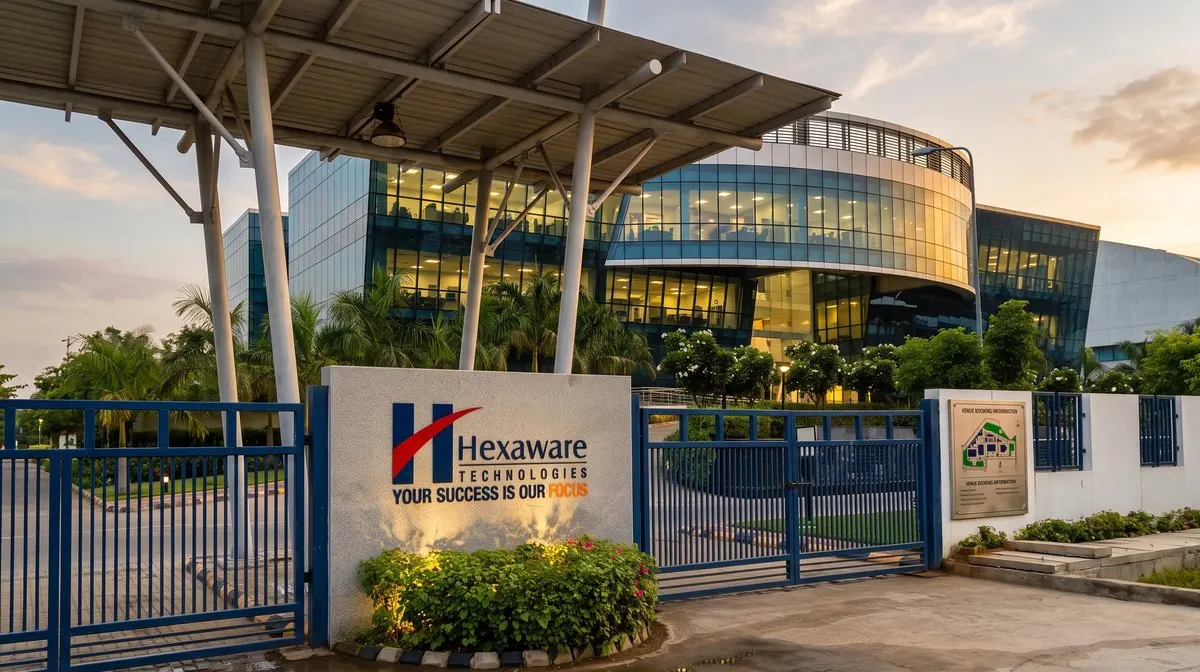
H-5, SIPCOT IT Park, Navalur, Siruseri,
Chennai, Tamil Nadu 600119
Sponsors & Partners
Want to become a sponsor? Get in touch!
Vivekanandan KS
Independent Contractor
Nix for SRE: The Zero-drift Hermetic infrastructure for Determinism
Abstract
Nix is a crucial technology for a wide range of domains in IT world, one of the important domains is SRE. In this talk I aim to shift the audience's thinking towards SRE and how we improve the workflow. I'll explain the big loopholes in the current industry standards and explain its hidden technical debt in energy, time, cost etc. I'll quickly introduce Nix and explain how it fits in the SRE domain. I'll explain the mental model of proactive reliability vs passive reliability. I'll also explain why determinism is crucial for SRE. The talk will also give an idea of how Nix + AI + SRE is way better than just using AI + SRE.
In short: Determinism is more important than one might ever think which traditional approaches try their best, but nothing ever came close to what Nix does in the history of tech.
Key takeaways:
What typical and AI first SRE lacks
How Nix makes infra easy to predict and gives true determinism
How Nix provides sovereignty for SRE
How Nix removes the complexity of DevOps, SRE workflows
Why it's better to use Nix + AI instead of using AI for SRE etc
Change in mental model of how u think about the whole SDLC process
Note: Though the topic and description may sound too technical, it actually isn't. It's just a different way of thinking. So this talk is for everyone from beginners to veterans.
Bio
A passionate Linux and Nix/NixOS guy who thrives on learning, exploring, and implementing open-source solutions. Driven by a love for DevOps and solving complex technical problems, he is a creative at heart - and a bassist on hiatus - who loves good stories, music, and anime.
Neel Shah
StackGen
The Rise of Agentic SRE: Humans, Agents, and Reliability
Abstract
From Reactive to Intelligent: Site Reliability Engineering is Moving Towards Autonomy. As organisations deploy increasingly complex and distributed architectures, traditional methods of incident response based on reactive practices fall behind. The need arises for smarter automation which would allow for quicker detection of anomalies, faster context analysis, and timely interventions within defined constraints. In this sense, agentic SRE is emerging as a discipline in which AI agents learn to analyze telemetry data, establish relationships among various system components, and help SREs with triage, diagnostics, and troubleshooting while respecting certain boundaries.
In this talk, I will discuss the principles of building a robust and dependable platform for agentic SRE, the key components that constitute the architecture, and the observability layer which provides foundational data. I will also examine the necessary safeguards required to ensure autonomy while at the same time keeping operations secure and auditable. Finally, through examples of practical use cases, such as alert triaging, incident copiloting, root cause analysis, and bounded automated remediation, we will explore how AI can be integrated into operations to improve reliability.
Bio
Neel Shah is a Developer Advocate at StackGen and a Google Developer Expert (GDE) for Cloud, based in India. He helps platform engineers and DevOps teams understand and adopt cloud-native infrastructure through talks, live demos, and community building having spoken at 40+ events worldwide, including KubeCon + CloudNativeCon India, PlatformCon, HashiTalks, OpenSearchCon Korea, FOSSASIA, and LinuxFest Northwest. His work centers on Kubernetes, GitOps, Infrastructure as Code (Terraform, Vault), AI-powered DevOps tooling, and observability pipelines. Neel organizes the CNCF Gandhinagar, HashiCorp User Group Gandhinagar, and Google Cloud Gandhinagar communities, and has mentored 15+ hackathons and open-source programs. He holds certifications including GCP DevOps Professional, Azure AZ-104, FinOps Certified Engineer, Terraform Associate, and Vault Associate, and has been recognized as Sessionize's Most Active Speaker in both 2024 and 2025.
Navin Pai
StackGen
Runbooks for the AI SRE Era
Abstract
Your runbook has two readers at 3AM now. The tired human it was written for, and the agent standing next to them. The human fills every gap with judgement. The agent fills it with action. "Restart the service if it looks unhealthy" was a fine instruction for one of them. For the other it's four unanswered questions and a production change. This talk is what we learnt putting agents in the incident channel and watching them run our runbooks exactly as written, which turned out to be the problem. Three real failure modes: a confidently hallucinated diagnosis, an unsafe action that free reasoning decided was reasonable, and "remove outdated entries" where nobody had ever defined outdated. Every adjective is a landmine. The fix isn't five hundred lines of YAML. It's making six decisions explicit that a senior engineer already makes in their head: trigger, precondition, verify, stop condition, rollback, and where a human must sit. We'll show the same runbook before and after, the existing schemas you should borrow rather than invent, how to climb from read-only to autonomous one rung at a time, and the part that finally fixes staleness: the agent proposing runbook edits as PRs after every incident, with a human still holding the merge button. The runbook isn't dying. It's being promoted from documentation to interface.
Bio
Navin is Director of Engineering at StackGen, where he leads the team building the future of Agentic Ops. You'll often find him on the internet stoking flamewars with his opinions about Observability, Open Source, and Dev Culture.
Balachandar Natarajan
Ford
Self Healing Systems - The next wave in SRE towards Autonomous System
Abstract
1) If AI could take over one part of our reliability and monitoring process, where would it deliver the greatest impact? Can it predict and prevent outages better than human expertise and intuition?
2) How close are we to truly self-healing infrastructure, and where can Agentic AI help SRE and DevOps teams shift from reactive firefighting to proactive prevention?
3) Where do our biggest blind spots lie today — open-source dependencies, CI/CD pipelines, or software artifacts? How has supply chain security evolved from a technical concern into a business and leadership priority?
Bio
Balachandar Natarajan is the Global Engineering Platform Manager for Ford's e-Commerce Marketing & Sales, bringing over 20 years of IT leadership experience. Specializing in cloud platforms, MACH architecture, DevSecOps, SRE, and AI-driven solutions, Balachandar is also an active cybersecurity board member, technical trainer, and conference speaker.
Throughout his tenure with Ford Enterprise Technology since 2007, he has successfully led large-scale hyper-scaler cloud ERP transformations, agile global product management, and enterprise-wide data governance initiatives. His leadership approach bridges deep technical execution with customer-centric business strategy.
Beyond his enterprise role, Balachandar is passionate about community building and knowledge sharing. He serves on the Board of Directors for the ISACA Chennai Chapter Contact info and regularly speaks at technology conferences on platform engineering, autonomous systems, and agentic AI.
Muruganandan Jagadesan
AMPS Digital Private Limited
Technology People Nature
Abstract
Technology. People. Nature.
Finding the Balance to Build a Meaningful Future
Technology inspires me to build.
People inspire me to learn.
Nature inspires me to reflect.
For more than two decades, I have had the privilege of building technology products, leading diverse teams, and exploring emerging technologies.
Along this journey, I have come to realize that meaningful innovation isn't measured by the sophistication of the technology we create, but by the positive impact it brings to people's lives and the world around us.
I've been fortunate to experience all three dimensions — building technology that creates impact, learning with and from people, and discovering the timeless wisdom that nature quietly shares.
The more I reflect, the more parallels I discover between these three worlds.
Technology evolves through principles.
People grow through principles.
Nature thrives through principles.
Yet, in our pursuit of technological advancement, we sometimes overlook the importance of human connection and our relationship with the natural world.
Perhaps the future isn't about choosing one over the other.
It's about finding the right balance between Technology, People, and Nature — harnessing innovation, empowering people, and respecting the world we live in.
Because the future we build should not just be technologically advanced; it should also be human-centered and sustainable.
Welcome to Technology. People. Nature.
Bio
Muruga J. – Chief Technology Officer | AI & Digital Transformation Leader
Muruga J. is a technology leader with over 25 years of experience in product engineering, technology strategy, and digital transformation. He has architected and led the delivery of scalable, secure, and sustainable SaaS platforms serving global corporations and international institutions, including the World Bank and the International Monetary Fund (IMF).
His expertise spans Artificial Intelligence, Machine Learning, Deep Learning, Robotic Process Automation (RPA), and emerging technologies. He has spearheaded the development of AI-powered automation solutions and intelligent agentic workflows, helping organizations, particularly in healthcare, enhance operational efficiency and accelerate digital transformation.
An alumnus of the Indian Institute of Management Calcutta (IIM Calcutta), Muruga brings together strategic business insight, deep technology expertise, and a strong focus on innovation and execution.
He currently serves as Chief Technology Officer at AMPS Digital Private Limited, Chennai, India, where he leads technology strategy, product innovation, and enterprise modernization initiatives, with a focus on translating emerging technologies into meaningful and measurable business outcomes.
Vishnusekar Chandrasekaran
UST
From Specifications to Reliability: How SDD and AI-DLC Are Reshaping SRE and DevOps
Abstract
The emergence of AI-driven software development is changing how applications are designed, built, tested and operated. Approaches such as Spec-Driven Development (SDD) and Amazon's AI-Driven Development Lifecycle (AI-DLC) introduce new opportunities to bring structure, automation and intelligence into the engineering lifecycle. But what does this mean for Site Reliability Engineering and DevOps?
This talk explores how structured specifications can help define reliability requirements, security constraints and operational expectations early in the development process. It examines how AI-assisted workflows can support infrastructure provisioning, CI/CD automation, policy enforcement, testing and operational activities. More importantly, it discusses how SRE and DevOps practices can evolve to establish the guardrails that make AI-driven delivery reliable, secure and production-ready. We will explore the changing responsibilities of engineers, from executing repetitive operational tasks to designing platforms, validating AI-generated outcomes and engineering system reliability. The session concludes with practical perspectives on preparing SRE and DevOps teams for this emerging model of software delivery.
Bio
Senior DevOps / Site Reliability Engineer with over 8 years of experience designing and operating highly available, cloud-native infrastructure across Azure, AWS, and GCP. Skilled in Kubernetes, OpenShift, Terraform, CI/CD, GitOps, Linux administration, observability, automation, and production operations.
Possesses a strong background in infrastructure automation using Python and Bash, cloud modernization, incident management, platform reliability, and enterprise-scale application onboarding. Passionate about building resilient distributed systems and enhancing engineering productivity through automation and AI-assisted development tools such as Claude and GitHub Copilot.
Srinivasan Rangachary
VastPRO Technologies Private Limited
The Distributed Cache Paradox: When Scaling for Performance Makes Everything Slower
Abstract
Distributed caching is often considered a key enabler of scalability and high performance, but what happens when introducing distributed cache consistency turns a 20-second operation into a 3-minute bottleneck?
Drawing from real-world experience building a multi-tenant Java platform, this talk explores the hidden performance costs of cache invalidation, synchronization, and inter-node communication in distributed architectures. We will examine how different caching strategies-including JVM-local caches, JMS-based invalidation, centralized Valkey/Redis, and clustered caching frameworks—balance performance, consistency, and operational complexity.
Through a practical case study, we will discuss strategies such as batching cache invalidations, reducing messaging overhead, and optimizing bulk operations without compromising data consistency.
Attendees will walk away with actionable insights into identifying caching bottlenecks, understanding architectural trade-offs, and designing more reliable, scalable distributed systems.
Bio
Srinivasan Rangachary is a serial entrepreneur, business consultant, and product specialist with over 28 years of experience in large-scale eCommerce implementations, operations management, and platform innovation. He has led engineering and consulting teams to deliver complex, high-personalization Oracle ATG Commerce solutions for Fortune 500 enterprises, alongside spearheading his own proprietary platform, VaZtCommerce. Currently focused on eCommerce product development and strategic consulting, Srinivasan helps organizations build integration roadmaps and next-generation personalized retail platforms. Previously, he founded and led multiple ventures across the automotive, software training, consulting, and development sectors. He holds an MS in Artificial Intelligence and Machine Learning from Liverpool John Moores University, a PGDBA in Finance from Symbiosis, Pune, and a BTech in Automobile Engineering from the Madras Institute of Technology, Anna University.