SREday

Site Reliability, DevOps and Cloud

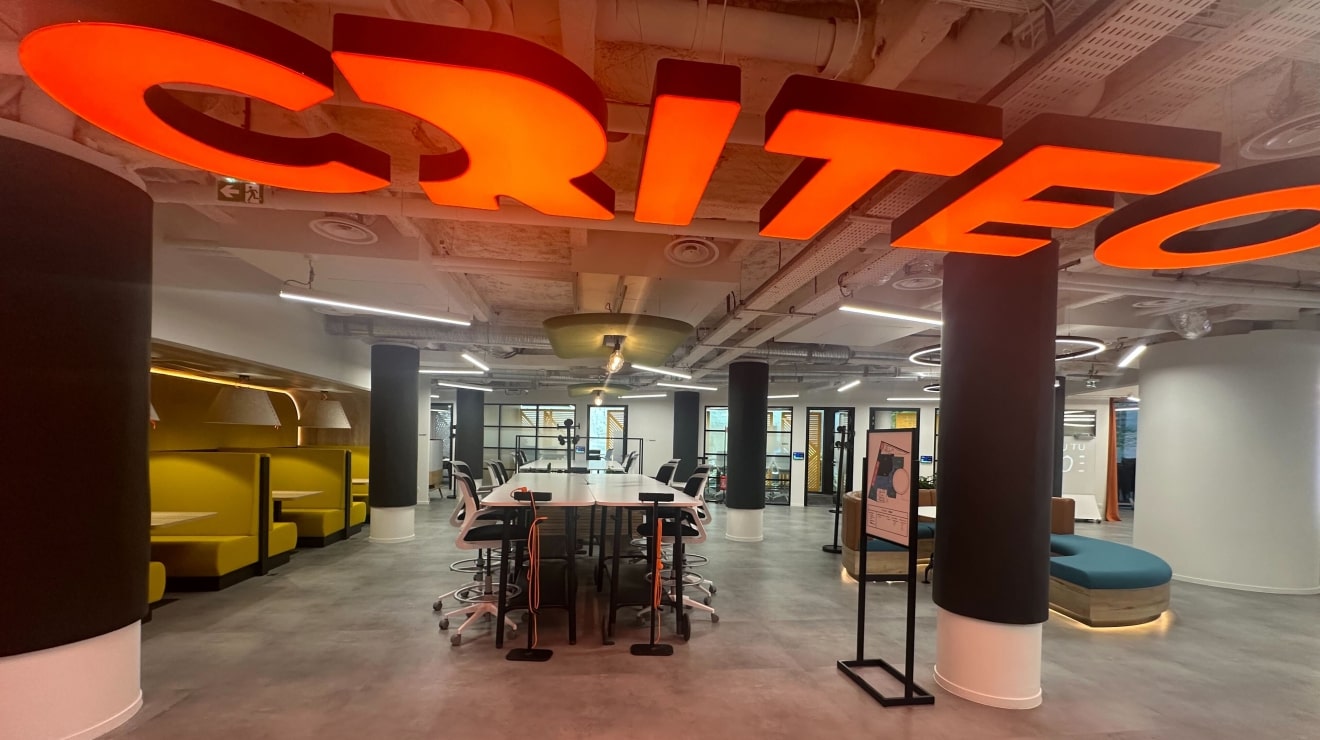
November 19-20, 2025 Criteo, Paris, France

2
Days
20+
Speakers
2
Tracks
90+
Attendees

SREday is a worldwide series of community events for engineers who build, ship and run modern software systems. Across cities around the world, we bring together people working in reliability, cloud, DevOps, observability and production engineering to share real-world experience, connect with their local community and explore how these disciplines are evolving in the age of AI.

Companies presenting:

Axoflow, CAST AI, Catchpoint, countX GmbH, Criteo, Datadog, DoiT International, Ewake.ai, Gatling, Grafana Labs, Happening, Imply, OllyGarden, PagerDuty, Varnish Software, vCluster, Waovo

Topics so far:
Performance & Scalability

This is a past event, what's next?

Schedule

November 19-20, 2025 2 parallel tracks 10AM - 5:30PM Paris, in-person

Day 1

view as table
main room • Track day1

10:00

Kyle Hoondert

KeynoteWhat Observability Can Learn From BI: Decoupling for Speed, Scale, and Flexibility

Imply
Today’s observability platforms are often vertically integrated—binding data storage, query, and visualization layers into a single stack. This tight coupling drives up costs, makes integrations painful, and slows teams down. But it doesn’t have to be this way. In this talk, we’ll explore how SRE teams can benefit from a more modular approach to observability—one inspired by the evolution of Business Intelligence. Just as BI stacks evolved to separate ETL, data warehouses, and dashboards, observability stacks can be designed around clear boundaries: interoperable tools, technology-neutral query layers, and plug-and-play storage. You’ll learn why decoupled observability architecture is essential for cost control, agility, and tool flexibility—and how to move toward a stack that meets the real-world needs of today’s SRE teams.... Read more


10:30

Matthieu Blumberg

KeynoteThe Infrastructure Renaissance: Security, Sustainability, and Scale

Criteo
As infrastructure evolves from cost center to innovation engine, the stakes have never been higher. This keynote will unpack the forces reshaping the infrastructure landscape—from the rise of sovereign clouds and liquid cooling to the imperative of secure-by-default systems. Drawing on lessons from Criteo’s own transformation, this talk will highlight how infrastructure leaders must balance sustainability, performance, and security to thrive in a post-cloud, AI-accelerated world. It’s not just about uptime—it’s about impact.... Read more

11:00

Poone Mokari

KeynoteListen to Production the Way It Deserves

Ewake.ai
Production today is messy. There’s noise, complexity, and a constant stream of change. And while we’ve come a long way with observability, it still leans heavily on human foresight. Logs, metrics, alerts, they’re all things we had to think of ahead of time. But when we don’t? That’s where blind spots are born. Ambient agents try to shift that model. These are always-on, proactive teammates who don’t wait for a prompt. They listen to everything happening in production. They surface things we’d likely miss. In this talk, we’ll dive into what it takes to bring an ambient agent into your stack, how it listens, learns, and acts, and why this might just be the layer of intelligence your system’s been missing.... Read more

11:30

Coffee break

Main lobby

12:00

Annie Talvasto

I’ll Be Backoff: Benchmarking AI-Powered Platform Engineering Tools

Waovo
AI is making its way into platform engineering—not just as a workload, but as a smart automation layer for how platforms are built, operated, and optimized. Promises of intelligent autoscaling, self-tuning systems, and AI-assisted remediation are everywhere. But how do these claims hold up in real-world Kubernetes environments? In this deeply technical session, the latest generation of AI-powered features and patterns will be benchmarked and stress-tested in the context of platform operations. From scaling decisions to observability-driven automation and adaptive infrastructure behavior, the focus will be on how these systems perform under load, how they handle edge cases, and what the operational overhead truly looks like. Attendees will walk away with a clear-eyed view of the strengths and limitations of AI-driven platforms, grounded in data—not just demos. Because if your infrastructure says “I’ll be back,” it’s worth knowing what it’s planning.... Read more

12:30

Heather Thacker

Getting Started with Reliable Load Testing

Gatling
Load testing doesn't have to be resource intensive or last minute. We will walk through how to set up a Gatling test, integrate it into CI/CD, and use observability data to make the results actionable. Learn how to add load testing by starting small, staying reliable, and scaling with confidence.... Read more

13:00

Juliano Costa & Yuri Oliveira Sa

Crash-Proofing Your OpenTelemetry Collector

Datadog & OllyGarden
When planning observability for a distributed system, it's common to avoid having each microservice sending telemetry data directly to the backend. Instead, a Collector is typically deployed per host or node to receive, process, and forward telemetry data. This approach improves bandwidth usage and centralizes control over telemetry flow. However, it also introduces a critical point of failure: what happens if the Collector crashes after receiving data but before it can forward it to the backend? In this session, we’ll walk through the most used reliability mechanisms in the OpenTelemetry Collector and their limitations (potential data loss, limited control in fanout scenarios and so on). Then, we’ll introduce a newly added OTLP exporter batching option (distinct from the batch processor), explain why it was needed, how it works, and demonstrate its behavior in a crash-and-recovery scenario together with the exporter helper and persistent queue.... Read more

13:30

Lunch & networking

Main lobby

14:30

Piotr Zaniewski

Instant KAI Sandboxes with vCluster: Multi-Tenant, Multi-Scheduler GPU Sharing

vCluster
**Session Overview** Kubernetes offers many ways to share GPUs, but a single, cluster-wide scheduler often forces trade-offs between utilization, stability, and team autonomy. This talk shows how vCluster makes the NVIDIA Kubernetes AI Scheduler (KAI) run as an opt-in service for each tenant—so platform teams can raise GPU density while keeping operations predictable. **What We’ll Cover** - Problem statement – why mixed workloads leave GPUs under-used and complicate on-call - vCluster fundamentals – lightweight control planes that isolate scheduling logic, not hardware - KAI at a glance – fractional GPU allocation, gang queues, topology awareness - Live demonstration – two vClusters on one host **Key Takeaways** - A reproducible pattern for running different schedulers side-by-side - Practical steps to increase GPU utilisation without adding more clusters - An isolation model that lets teams experiment safely **Why It Matters** As GPU demand grows, platform engineers must balance cost efficiency with reliability. Combining vCluster and KAI delivers both—turning idle accelerators into productive capacity while preserving operational control. ``` Want me to also make a **slide-deck version** in Markdown (short bullets, less prose) so you can drop it into a presentation tool? ... Read more

15:00

Laurent Godet

Orchestrating the Edge: A Hybrid Kubernetes Journey

Happening
This session explores how Happening completely revamped their edge Kubernetes infrastructure by implementing EKS Hybrid to centrally manage all their on-premise clusters across different markets. Faced with regulatory requirements to store data locally at the edge while maintaining operational efficiency, we designed a sophisticated hybrid architecture with a centralized AWS control plane to manage edge data planes. We'll dive deep into our technical implementation including our mixed-mode CNI setup with VPC-CNI and Cilium, multi-pool IPAM to handle cross-cloud networking, and how we leverage Kyverno policies to ensure workload placement across markets. Learn how we established seamless connectivity between AWS and on-premise environments through Wireguard VPN tunnels, coupled with BGP routing policies to efficiently route edge workloads. By centralizing management of geographically distributed Kubernetes clusters, we've reduced our on-premise management burden by 40%, resulting in substantial cost savings and dramatically decreased the team operational toil. Cluster upgrades which we were always tedious is now done in just a few hours across all environments simultaneously, significantly improving our maintenance windows and capacity management.... Read more

15:30

Daniel Afonso

Plan for Unplanned Work: Game Days with Chaos Engineering

PagerDuty
How do you plan for unplanned incidents? You practice with Chaos Engineering. Strong incident response doesn't just happen, you have to build the skills and train your team. Practicing for major incidents gives your team insight into how your applications will behave when something goes wrong as well as how the team will interact to solve problems. Combining your Incident Response practices with Chaos Engineering roots your response practice in real-world scenarios, helping your team build confidence.... Read more

16:00

Networking & sponsor crawl

Main lobby

16:30

Attila Szakacs

Counting What You Care About in Your Security Data Pipeline

Axoflow
Traditional syslog systems have long been opaque — exporting minimal, fixed-format metrics that rarely reflect what users actually care about. AxoSyslog, a high-performance fork of syslog-ng, has taken a different path: not only adopting native Prometheus metrics, but also enabling metric emission directly from the user’s log processing logic. In this talk, I’ll share how we transitioned from CSV-style global and per-driver metrics to full Prometheus integration. But more importantly, I’ll explore a less common mindset: treating metrics not as static artifacts of a system, but as programmable, user-defined views of what matters. Users can emit fine-grained, label-rich metrics from log routing logic itself — for example, tracking per-tenant message volume, labeling metrics with custom log or environment related info, or observing how often certain fields are missing. We’ll walk through: * What syslog metrics looked like historically (and why they fell short). * Our journey to integrating Prometheus natively. * How update_metric() works and why it's powerful. * Real-world use cases where dynamic metrics made debugging and policy enforcement dramatically easier. If you want to make observability accessible in deeply traditional parts of the stack — or want to let users code their own metrics — this talk is for you.... Read more

17:00

Wrap up

Scan each other's QR codes & head to a nearby pub!
Time main room
10:00 Keynote: What Observability Can Learn From BI: Decoupling for Speed, Scale, and Flexibility
Kyle Hoondert • Imply
10:30 Keynote: The Infrastructure Renaissance: Security, Sustainability, and Scale
Matthieu Blumberg • Criteo
11:00 Keynote: Listen to Production the Way It Deserves
Poone Mokari • Ewake.ai
11:30 Coffee break
12:00 I’ll Be Backoff: Benchmarking AI-Powered Platform Engineering Tools
Annie Talvasto • Waovo
12:30 Getting Started with Reliable Load Testing
Heather Thacker • Gatling
13:00 Crash-Proofing Your OpenTelemetry Collector
Juliano Costa & Yuri Oliveira Sa • Datadog & OllyGarden
13:30 Lunch & networking
14:30 Instant KAI Sandboxes with vCluster: Multi-Tenant, Multi-Scheduler GPU Sharing
Piotr Zaniewski • vCluster
15:00 Orchestrating the Edge: A Hybrid Kubernetes Journey
Laurent Godet • Happening
15:30 Plan for Unplanned Work: Game Days with Chaos Engineering
Daniel Afonso • PagerDuty
16:00 Networking & sponsor crawl
16:30 Counting What You Care About in Your Security Data Pipeline
Attila Szakacs • Axoflow
17:00 Wrap up

Day 2

view as table
main room • Track day2

10:00

Emmanuel Guérin

KeynoteDependencies galore: Behind the scenes of large-scale multi-repository CI

Criteo
Setting up continuous integration is now a common practice in the industry. However, there are still only few effective solutions for doing so across hundreds of repositories encompassing thousands of projects. How do we manage dependencies between projects? How do we assess the quality of each one? How do we automate the validation of a project's clients even before merging a pull request? In this session, we’ll quickly revisit the fundamentals of the problem. Then, we’ll share Criteo's own journey on this topic, along with the pros and cons of the different approaches we explored.... Read more

10:30

Tomaz Medrado

KeynoteProduction-Ready LangChain Agents - Multi-Tool Architectures for SRE Investigations

Ewake.ai
In modern distributed systems, the volume and fragmentation of production data can easily and frequently overwhelm human operators. This talk introduces a LangChain agent built to autonomously investigate production issues by orchestrating multiple tools across organizations’ stacks. We'll walk through how to build a modular, composable multi-tool agent, dig deeper into real-world reliability challenges, and share strategies and lessons learned in making these agents production-ready.... Read more

11:00

Jerome Baude

KeynoteOptimizing Kubernetes with Container Live Migration

CAST AI
Containers are immutable by design making Kubernetes the standard execution platorm for stateless workloads. We do see more and Statefull applications designed for Kubernetes like Databasaes and Jobs. But it still comes with some challenges. What about a long running process that you want to migrate from one node to another without loosing any processing time? With Container Live Migration a Statefull Minecraft process can be migrated from one node to another without any visible interruption https://www.youtube.com/watch?v=LveOlly1ajA&t=4s. Similarly, you can migrate a long running job to a new machine when you need to perform maintenance activities on your worker node. Join our session to learn how Live Migration can reduce toil, improve uptime and save costs.... Read more
11:30

Coffee break

Main lobby

12:00

Bence Csati

Telemetry as Code: Declarative Observability with OpenTelemetry

Axoflow
This talk introduces telemetry as code**: bringing the same declarative principles that transformed infrastructure to your observability stack. Using **OpenTelemetry Collector Custom Resources** and the **Telemetry Controller**, we'll demonstrate how to eliminate configuration drift, enable true multi-tenancy, and make observability as reliable and repeatable as your deployments. --- **What You'll Learn** **Transform Your Telemetry Pipeline** - Replace brittle YAML with declarative Kubernetes CRDs that abstract complexity while maintaining flexibility - Build tenant-aware routing that scales from single teams to enterprise-wide deployments **Master Production Patterns** - Design secure, multi-tenant Prometheus integration using Remote Write protocols - Leverage automated configuration validation and testing strategies that catch issues before production - Navigate the hidden complexities of cross-namespace telemetry routing and security **Avoid Costly Mistakes** - Learn battle-tested approaches for managing collector configurations across diverse environments ... Read more

12:30

Thijs Feryn

Leveraging the edge for observability

Varnish Software
Most organizations adopt CDNs or HTTP caching proxies to boost the performance and scalability of their web platforms. But there’s another powerful advantage that often goes underused: centralized observability. This presentation will demonstrate how to go beyond the traditional performance benefits of a caching proxy like Varnish and turn it into a rich observability layer. You’ll learn how to unlock and extend the valuable metrics and logs already flowing through your proxy, and how to integrate them with tools like Prometheus, Loki, and Grafana. We’ll also cover how to bring consistency to your observability stack by standardizing metrics, logs, and traces with OpenTelemetry. Since caching proxies and CDNs are designed to shield your origin servers from most requests, they become the most complete and reliable source of traffic insights. This session will show you how to take full advantage of that unique position—turning your proxy into both a performance accelerator and an essential source of observability insights.... Read more

13:00

Dominik Süß

Schema driven Observability with OpenTelemetry Weaver

Grafana Labs
OpenTelemetry Semantic conventions cover many layers of your stack but fall flat when it comes to business logic. But this doesn’t have to be the case! The OpenTelemetry Weaver project gives you the tools to build your own semantic conventions. With auto generated instrumentation libraries and documentation, developers no longer have to worry about whether an attribute is called customer_id, customerID, accountNumber or something completely different - it’s all in the schema! Built-in support for policy validation also ensures your alerts never break because a metric has been renamed.... Read more

13:30

Lunch & networking

Main lobby

14:30

Raphael Bizos

A History of Automatic Aggregations

Criteo
At Criteo, we’ve relied on automatic aggregations for years. “Automatic aggregation” is the name we give to a system of recording rules that matches most metrics and removes certain dimensions, such as the instance emitting the metric, to reduce the cardinality (i.e. the number of metrics) and thus making queries faster. What started as a workaround has become a key part of how we ensure backend stability and reliability at scale, with hundreds of millions of active metrics, all without requiring users to write a single recording rule. It also significantly reduces the cost of metrics storage. Internally, we call this approach zero-effort Observability, as most teams don’t have to write/maintain recording rules. In this talk, I’ll walk through how our approach to automatic aggregations has evolved over time, and how we’ve adapted it to fit naturally into our Prometheus-based stack. I’ll share the different implementations we’ve tried, the lessons we’ve learned, and how our latest version takes advantage of recent improvements in Prometheus (new type label) .... Read more

15:00

Daniel Afonso

The State of AI in Incident Management

PagerDuty
How many times were you woken up during the night to either spend more time than you would like trying to figure out what exactly broke, or just bash your keyboard in frustration once you figure out it was actually a false positive? What if there was a better way? I mean, AI is everywhere nowadays, what if we used it to solve these problems? Let's talk about AIOps and, through real-world case studies and industry research, see why it enables companies to reduce their MTTR by 62%, cut their alert noise by 91%, and predict 87% of potential service degradations — before they impact customers. We will take a journey through the evolution of AIOps: from early AI analytics, to the rise of GenAI, and taking us to the latest promised savior: Agents. But how do Agents help us when incidents come to knock? Will they speed us up? Are they even able to fix incidents without having to wake us up? And even if Agents are here to change everything, where are the gaps? Can everything be "agentified"?... Read more

15:30

Leon Adato

Network Observability Overlooked, Underappreciated, and More Important Than Ever

Catchpoint
The network the metaphorical plumbing through which all your precious non-metaphorical observability and monitoring data flows; it holds secrets you'll never find anywhere else. And it's more important today than ever before.... Read more

16:00

Networking & sponsor crawl

Main lobby

16:30

Dima Malyshenko

From Git Push to Exit: How Continuous Deployment Converted into Financial Success

countX GmbH
This talk presents the real-world story behind countX, a B2B fintech company that grew from first commit to successful private equity exit in under four years, without VC funding and with a lean, empowered team. From day one, we built on a fully serverless AWS-native architecture: Lambda, SNS/SQS, API Gateway, CloudFront, Cognito, and CDK. On top of that, we implemented a Continuous Deployment pipeline using GitHub, CodeBuild, and CodePipeline, enabling us to deploy to production dozens of times per week with high confidence and zero manual gates. But the talk isn’t just about architecture or tooling. What made this setup truly powerful was how we paired CD with Continuous Discovery - customer interviews, fake doors, lightweight A/B tests, and KPIs tied to actual product outcomes. This combination created a feedback-driven loop that allowed us to ship fast, iterate with purpose, and align engineering with business goals. The main takeaway: how a pure DevOps practice like Continuous Deployment, when paired with the right product mindset, can significantly increase not just delivery velocity, but team performance, product-market fit, and ultimately revenue and ROI. This is not a theoretical or aspirational talk, it’s a practical case study showing how modern SRE practices can become strategic drivers of business success.... Read more

17:00

Joshua Fox

Growing Machine Learning to production: Cloud MLOps for speed and efficiency

DoiT International
Machine Learning (ML) solutions often start on a simple platform like a virtual machine, which is great for initial research. However, as the system scales and enters production, automation becomes crucial. Cloud suites such as Google Vertex AI, Azure Machine Learning, and AWS Sagemaker, can streamline this process. For example, model training is more efficient with a managed service that automatically scales compute resources based on your training needs, eliminating the cost of idle resources –- as happens when you use the Jupyter Notebook or a VM alone for training. We’ll cover all parts of the ML process, including development, hypertuning, deployment for inference, experiments, model management, monitoring, performance, and operating the entire pipeline.... Read more

17:30

Wrap up

Scan each other's QR codes & head to a nearby pub!
Time main room
10:00 Keynote: Dependencies galore: Behind the scenes of large-scale multi-repository CI
Emmanuel Guérin • Criteo
10:30 Keynote: Production-Ready LangChain Agents - Multi-Tool Architectures for SRE Investigations
Tomaz Medrado • Ewake.ai
11:00 Keynote: Optimizing Kubernetes with Container Live Migration
Jerome Baude • CAST AI
11:30 Coffee break
12:00 Telemetry as Code: Declarative Observability with OpenTelemetry
Bence Csati • Axoflow
12:30 Leveraging the edge for observability
Thijs Feryn • Varnish Software
13:00 Schema driven Observability with OpenTelemetry Weaver
Dominik Süß • Grafana Labs
13:30 Lunch & networking
14:30 A History of Automatic Aggregations
Raphael Bizos • Criteo
15:00 The State of AI in Incident Management
Daniel Afonso • PagerDuty
15:30 Network Observability Overlooked, Underappreciated, and More Important Than Ever
Leon Adato • Catchpoint
16:00 Networking & sponsor crawl
16:30 From Git Push to Exit: How Continuous Deployment Converted into Financial Success
Dima Malyshenko • countX GmbH
17:00 Growing Machine Learning to production: Cloud MLOps for speed and efficiency
Joshua Fox • DoiT International
17:30 Wrap up

Speakers

Annie Talvasto
Waovo
Attila Szakacs
Axoflow
Bence Csati
Axoflow
Daniel Afonso
PagerDuty
Dima Malyshenko
countX GmbH
Dominik Süß
Grafana Labs
Emmanuel Guérin
Criteo
Heather Thacker
Gatling
Jerome Baude
CAST AI
Joshua Fox
DoiT International
Juliano Costa
& Yuri Oliveira Sa
Datadog & OllyGarden
Kyle Hoondert
Imply
Laurent Godet
Happening
Leon Adato
Catchpoint
Matthieu Blumberg
Criteo
Piotr Zaniewski
vCluster
Poone Mokari
Ewake.ai
Raphael Bizos
Criteo
Thijs Feryn
Varnish Software
Tomaz Medrado
Ewake.ai

Venue

Criteo

32 Rue Blanche
75009 Paris, France

Sponsors & Partners

Want to become a sponsor? Get in touch!
Let's talk!
We'll email you and share prospectuses for relevant events.
We'd like to (one or more)
Pick at least one
Conferences (one or more)
Pick at least one
Regions (one or more)
Pick at least one
Budget
Pick one